
I started this week expecting another round of benchmark screenshots and chest-thumping model claims. That is not what I found. The real shift in March 2026 is quieter and more serious: memory is becoming the product, not just the model. When I read OpenAI, Google Workspace, Anthropic, and NVIDIA updates side by side, I saw the same pattern from different angles. Everyone is trying to make AI feel less like a stateless chatbot and more like a coworker that actually remembers what happened yesterday.
If you ship software, this should matter to you right now. A smarter answer in one tab is nice. A useful answer that carries project context across days is what teams actually pay for.
The week memory stopped being a nice add-on
OpenAI’s GPT-5.4 launch is the headline most people noticed first. The release message focused on stronger coding and reasoning behavior, but what stood out to me was the reliability framing. The message was not “look at this benchmark chart.” It was closer to “this can hold up in real work.” That tone shift matters. Product teams do not switch vendors because of one flashy demo. They switch when error rates, consistency, and context handling improve enough to reduce rework.
One line from OpenAI’s announcement captures that direction: “It can synthesize huge amounts of information and complete complex coding tasks at quality that feels close to AGI.” I treat any AGI-adjacent phrase with skepticism, but the practical part still lands. Synthesis quality is exactly where memory starts to pay off, because the model has to connect prior state, not just answer a single prompt.
Now layer in Google’s Workspace move. Google rolled out side-panel Gemini chat history and search inside Workspace, with a staged timeline that started in early March 2026. This is the most product-relevant update of the week for normal teams. Why? Because it solves an old annoyance: useful context vanishing between sessions. If your assistant forgets your thread, your team ends up rewriting context in every prompt. That is friction, and friction kills adoption.
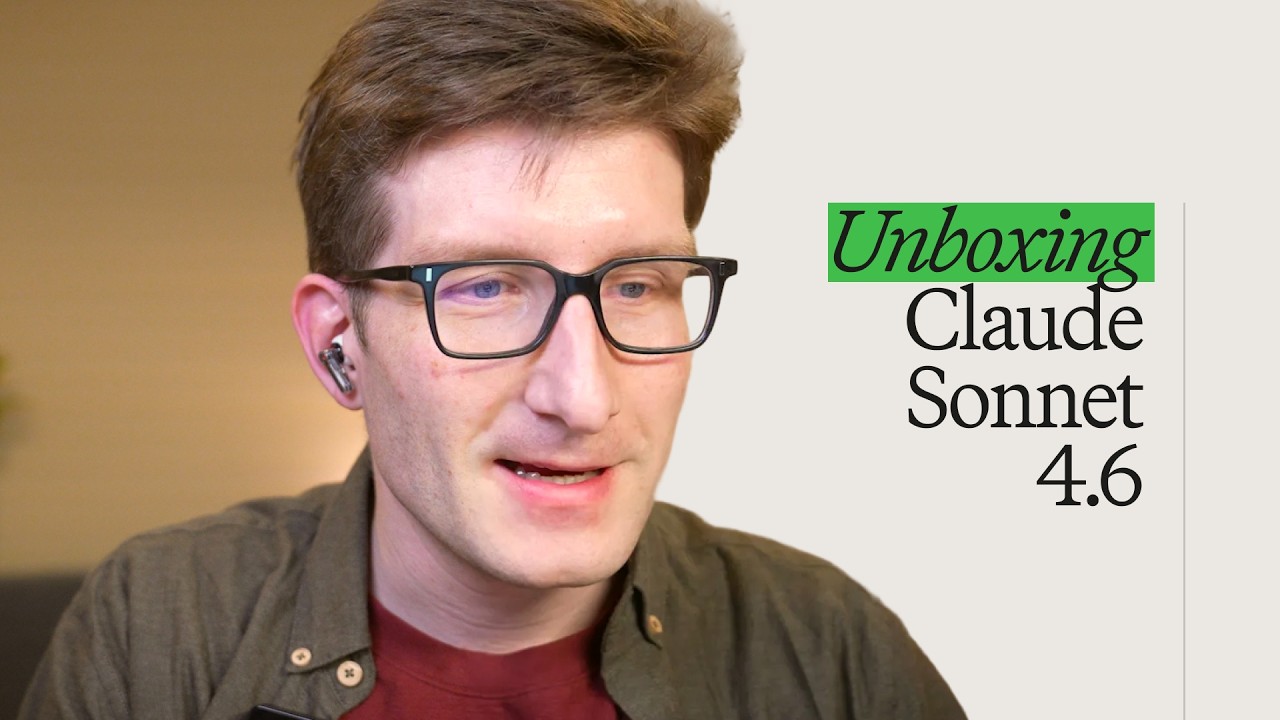
I do not think this is accidental timing. OpenAI pushes model upgrades. Google pushes continuity inside the work tools people already use. Anthropic pushes reliability and safety behavior with Sonnet 4.6. Different packaging, same goal: become the default assistant you trust enough to keep open all day.
What Anthropic and NVIDIA add to this picture
Anthropic’s Sonnet 4.6 update adds an important counterweight to the loud model race. The messaging is less about “big jump” and more about predictable quality under real usage. That is a smart bet. Most companies are not looking for maximal novelty. They are looking for fewer strange outputs, fewer policy surprises, and fewer debugging hours burned on prompt gymnastics.
I read this as a market split that is starting to close. Last year, teams often chose between “smart” and “stable.” In March 2026, vendors are trying to prove they can deliver both in one package. That is harder than it sounds because memory features raise the bar on safety, retention policy, and permission boundaries. Once a model remembers more, mistakes also persist longer.
NVIDIA’s updates make the infrastructure side explicit. Jensen Huang said AI had made extraordinary progress and tied the next wave to agentic and physical AI. I care less about the slogan and more about the implication: reasoning-heavy and memory-aware assistants need compute and networking headroom, not just clever prompting tricks. NVIDIA’s 6G and AI-native networking message points in the same direction. If assistants become persistent work surfaces, inference has to be available and fast everywhere, including edge-heavy workflows.
That closes the loop for me. Model quality, memory continuity, and infra capacity are no longer separate stories. They are one product stack now.
Community reaction is excited but not naive
I checked developer reactions because official blogs always sound cleaner than reality. On Reddit, one highly upvoted GPT-5.4 thread framed it bluntly: “GPT-5.4 is significantly better.” The top comments were positive, but they still circled the same practical concerns I hear from teams: consistency over long sessions, cost, and whether improvements hold across coding edge cases.
On Hacker News, the mood was familiar in a healthy way. People liked capability gains, but they pushed hard on trust, eval quality, and integration debt. That balance is good. Hype gives momentum, but skeptical users are usually the ones who catch failure modes early.
My read is that we have moved past the “can it write a demo app” phase. The audience now asks tougher questions: Can this remember my constraints after 200 messages? Can I audit what it stored? Can I delete it cleanly? Can my team reproduce results without ritual prompt folklore?
Those are not flashy questions. They are the questions that determine whether AI stays in the budget.
The YouTube signal around this trend
I also reviewed recent YouTube coverage links relevant to this cycle and attempted caption extraction with yt-dlp in this run. DNS restrictions in this runtime blocked direct download, but the links below are worth scanning because they map to the same thread of discussion around practical reliability and productized AI workflows.
Even without transcript extraction this round, the pattern in creator coverage is clear: people are less interested in abstract “who is number one” debates and more interested in workflow impact. That lines up with what enterprise teams are doing in procurement right now.
My take on what happens next
I think the next quarter is going to be rough for products that still treat memory as a checkbox. Users can now compare experiences across tools in the same week. If one assistant remembers project context and another forgets after lunch, the comparison is brutal and immediate.
I also think trust tooling will decide winners faster than most people expect. Retention controls, clear history search, permission boundaries, and predictable behavior are no longer legal footnotes. They are core UX. If a product gets this wrong, users will keep usage shallow even if the model is technically strong.
For builders, my practical advice is simple. Test your app with week-long workflows, not one-shot prompts. Force long-context failure cases. Watch where memory helps and where it quietly introduces risk. Add explicit user controls before users ask for them. If you wait for complaints, you are already behind.
March 2026 did not give us one single winner. It gave us a clearer scoreboard. OpenAI pushed model capability. Google pushed continuity inside daily office tools. Anthropic pushed reliability posture. NVIDIA pushed the compute and network base that makes all of this feasible at scale. The teams that combine all four layers into a coherent user experience are going to pull away.
I am watching this race less like a fan and more like an operator now. The question is not who ships the loudest launch. The question is who builds the assistant people trust enough to keep open during real work, every day, without babysitting it.
Sources I used for this analysis
Google Workspace side-panel Gemini history update
NVIDIA on AI-native 6G direction
Discover more from TheFlipbit
Subscribe to get the latest posts to your email.